
IGP, Label Rouge, claires and the oyster route by bike — the complete guide to a gourmet stay, just minutes from Les Jardins de Bonnemie.
Île d'Oléron sits within the Marennes-Oléron basin, Europe's leading oyster-farming region and the source of 50% of French oyster production. You don't have to go far to see why: the channels, claires and colourful huts that make the basin's reputation start just minutes from Les Jardins de Bonnemie, between Château-d'Oléron and Boyardville — a route many of our guests also cover by bike.
With close to 6,000 hectares of oyster beds and 3,000 hectares of claires, the Marennes-Oléron basin sells between 45,000 and 60,000 tonnes of oysters every year — half of France's total production. It's also the only French oyster basin whose oysters hold a Protected Geographical Indication (IGP, awarded in 2009), and the only one that can claim the Label Rouge for some of its oysters.
What sets Marennes-Oléron apart from France's other basins (Arcachon, Cancale, Brittany) is the final stage of rearing: ageing in claires, former clay-bottomed salt marshes converted to oyster farming in the 19th century. Fresh water and seawater mix there with every tide, creating conditions ideal for a microalga called navicule bleue (Haslea ostrearia). This alga releases a natural pigment, marennine, which gradually turns the oyster's flesh green and gives it its characteristic terroir flavour — a phenomenon found nowhere else in the world.
Not all Marennes-Oléron oysters are equal — the length and density of ageing in the claires produce four distinct categories, from size to texture.
The most common: aged in a claire at a density of 20 to 40 oysters per m². Modest flesh, sharp iodine notes — the classic reference point on a seafood platter.
A fine de claire aged for longer, in contact with the navicule bleue, which gives it its green colour and woodland aromas. The only green oyster to hold the Label Rouge.
Aged for at least two months, at a reduced density of 10 oysters per m² — plumper, meatier flesh than a fine de claire, for a milder flavour.
The rarest: reared and aged in a claire at very low density (5 per m² maximum) for 4 to 8 months. Meaty, crisp flesh, a long finish.
Between the harbours of Château-d'Oléron and Boyardville, the oyster route runs for 5 km alongside the oyster channels of la Brande, la Baudissière and l'Arceau — a flat, waymarked route, easy on foot or by bike, that cuts through marshland and working oyster huts. It's one of the most photographed stretches of the island's 150 km of cycle paths, and one of the easiest to combine with a tasting stop along the way.
The oyster huts at the harbours of Château-d'Oléron and Boyardville sell their production direct — fine and spéciale oysters, tasted on the spot with a glass of white wine, Colombard or Pineau.
Around forty colourful huts clustered inside the Moëze-Oléron nature reserve. A hut-turned-museum screens a 1907 film on period oyster-farming techniques; guided tours by reservation.
Expect around €4.50 to €6 for a one-hour guided tour, €6 to €8 for a two-hour storytelling walk, and €6.50 for a tasting plate with a glass of Colombard.
Les Jardins de Bonnemie is the ideal address for a stay on Île d'Oléron, close to everything — including the oyster basin. La Lavande, Le Romarin or Les Oliviers suit a couple just as well as a family on a gourmet getaway — each with its own equipped kitchen, whether for cooking or simply shucking the day's oysters on the terrace. Check the availability calendar or request a quote for your stay.
See the three houses and their rates →
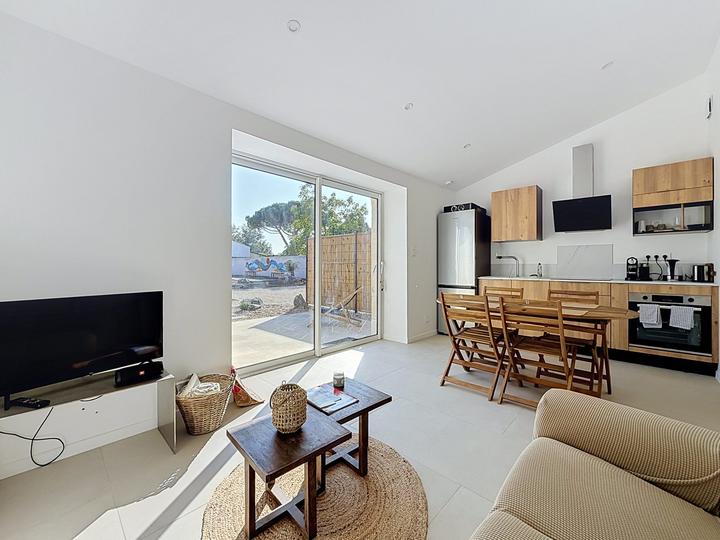
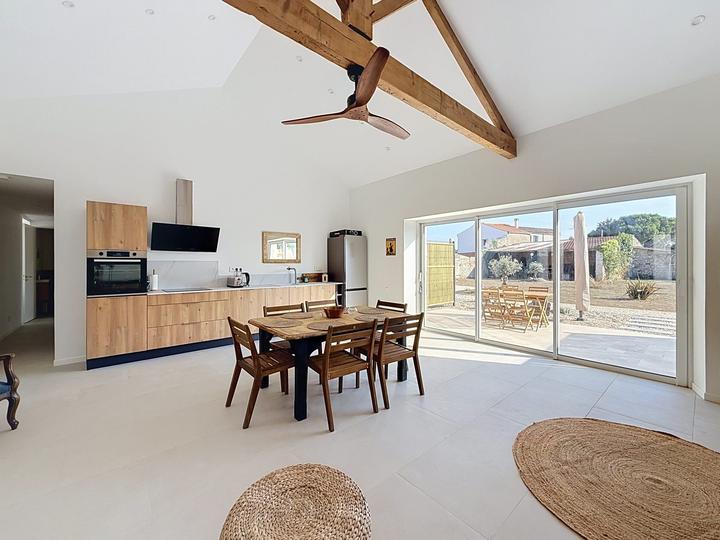
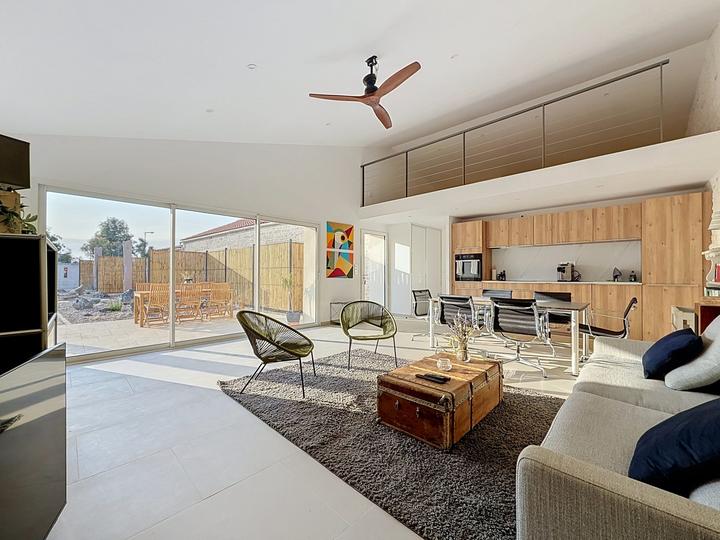
Book your stay and enjoy the oyster basin just minutes away.
See availability Request a quote